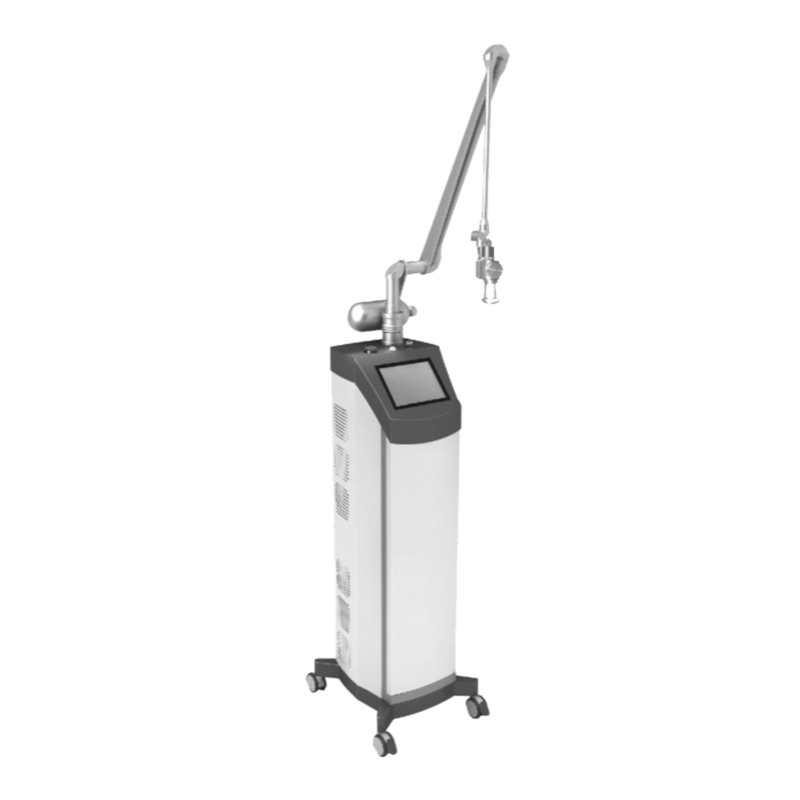
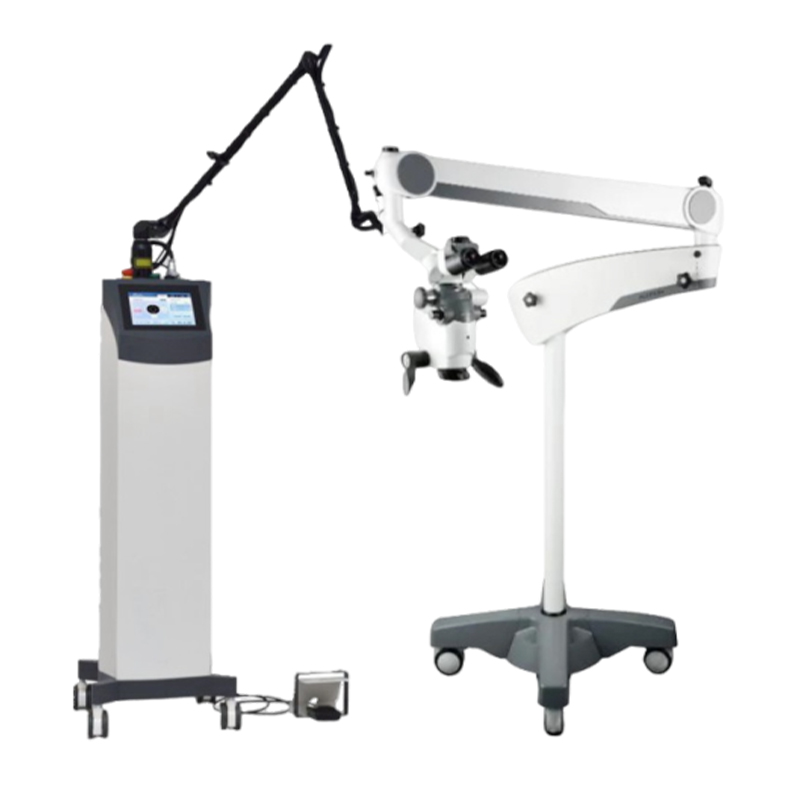
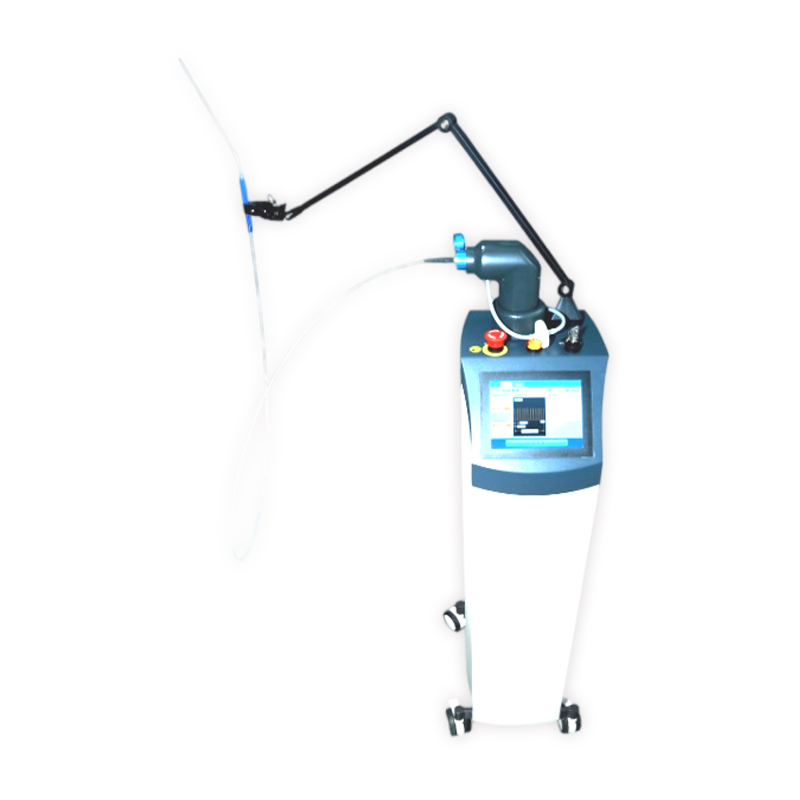
Carbon Dioxide Laser Treatment System (Dermatological Cosmetology)
Different working modes of fractional laser: When used clinically, fractional laser can be implemented in two ways, that is, installing and using a beam splitter or a scanner at the end of the optical path. In the traditional beam splitter mode, the high-power original light beam is divided into many fine light beams by a "sieve-like beam splitting lens" and simultaneously irradiates the target tissue, generating multiple micro-lesions at the same time. This pixel laser (or called multi-element focusing) may seem to have the same emission result as the fractional laser, but in fact, their emission principles are completely different. The disadvantage of this mode is that the spot diameter, shape, and dot pitch are all fixed (commonly known as the stamping mode), and it is impossible to form continuous heat energy assistance, resulting in low utilization rate of heat energy. In addition, the heat acts on the tissue at the same time within a short period, and since the beam splitting lens is not an ideal convex lens, the light spot is prone to refraction and diffraction, leading to poor focusing performance.


 鲁公网安备 37100402000362号





Carbon Dioxide Laser Treatment System (Dermatological Cosmetology)
Different working modes of fractional laser: When used clinically, fractional laser can be implemented in two ways, that is, installing and using a beam splitter or a scanner at the end of the optical path. In the traditional beam splitter mode, the high-power original light beam is divided into many fine light beams by a "sieve-like beam splitting lens" and simultaneously irradiates the target tissue, generating multiple micro-lesions at the same time. This pixel laser (or called multi-element focusing) may seem to have the same emission result as the fractional laser, but in fact, their emission principles are completely different. The disadvantage of this mode is that the spot diameter, shape, and dot pitch are all fixed (commonly known as the stamping mode), and it is impossible to form continuous heat energy assistance, resulting in low utilization rate of heat energy. In addition, the heat acts on the tissue at the same time within a short period, and since the beam splitting lens is not an ideal convex lens, the light spot is prone to refraction and diffraction, leading to poor focusing performance.